





Entitlement to a disability pension
A member who, before reaching the standard retirement age, is permanently or temporarily unable, as a result of a physical infirmity or a decline in physical or mental capacity, to carry out work in which medical or veterinary expertise is applied or utilised (e.g. in teaching and research, in industry, business and the media, in administration and the civil service) may apply for a disability pension.
Conditions for occupational disability
The condition for a claim for occupational disability is the inability to carry out gainful employment within the entire field of medical or veterinary practice. It therefore does not depend on the specific (specialist medical/veterinary) activity last performed by the member. At the same time, a claim for benefits within the meaning of the Articles of Association of the Sächsische Ärzteversorgung requires total occupational disability. There is no provision for a graduated or partial occupational disability.
Commencement and duration of benefits
The disability pension becomes payable at the earliest on the date on which the application for a disability pension is received by the Sächsische Ärzteversorgung. In the event of temporary incapacity for work, the disability pension is granted for a limited period. If the occupational disability persists, a new application for the occupational disability pension may be submitted. In the event of permanent occupational disability, the occupational disability pension is granted for an indefinite period. Upon reaching the standard retirement age, the occupational disability pension is converted into a mandatory old-age pension.
Financial security through the child allowance
In the event of recognised occupational disability, a child allowance amounting to 10% of the pension granted (see the Statutes of the Sächsische Ärzteversorgung) may be claimed for each child up to the age of 21. An extension up to the age of 27 is possible if the child is in school, studying at university, undergoing vocational training, performing voluntary service for a charitable organisation, or is themselves permanently unable to work. The child allowance is paid to the recipient of the occupational disability pension independently of state child benefit and is subject to taxation in accordance with the Income Tax Act.

Voluntary contribution towards costs
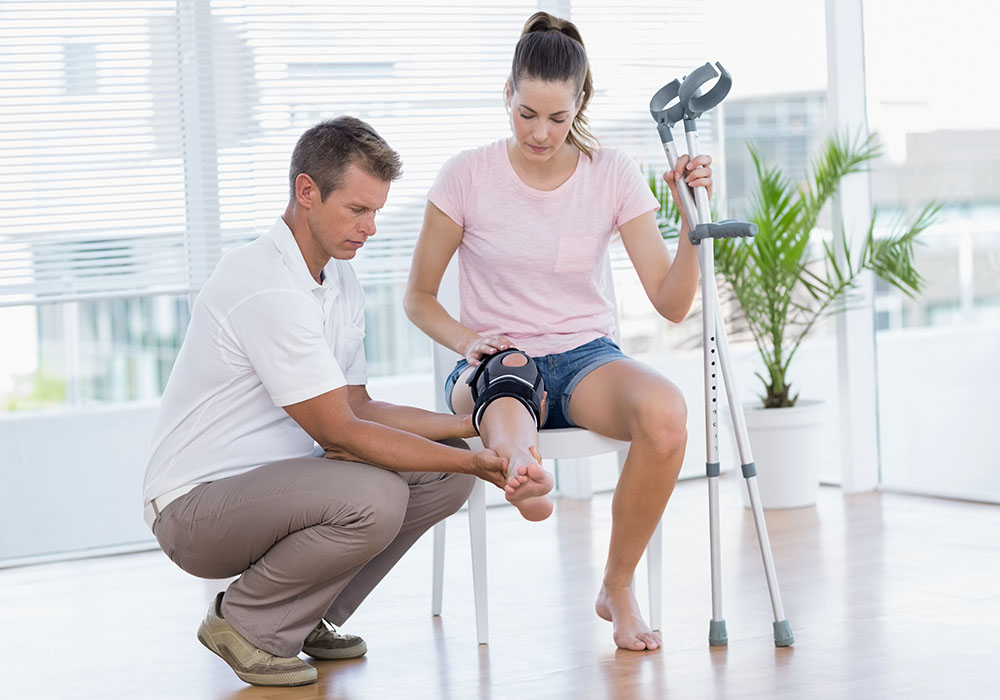
Upon application, the Sächsische Ärzteversorgung may grant its members a subsidy towards the costs of medical rehabilitation measures not covered by another funding body, as a discretionary benefit.
Distinction from other providers
The reason for this is that Sächsische Ärzteversorgung is not a rehabilitation provider, and medical rehabilitation measures are also provided by other providers. However, Sächsische Ärzteversorgung generally covers the risk of occupational disability, but not that of illness. Therefore, if there is a primary statutory, statutory or contractual obligation on the part of another public or private funding body (e.g. the German Pension Insurance, statutory or private health insurance, the Federal Employment Agency) to cover the costs, no subsidy can be paid.
Conditions for the grant
The Sächsische Ärzteversorgung’s contribution towards the costs of medical rehabilitation is subject to the condition that the rehabilitation programme maintains, significantly improves or restores the member’s ability to work. Furthermore, the medical rehabilitation programme must be necessary and likely to be successful.
Frequently Asked Questions About Disability Insurance
It is not permitted to practise as a doctor or vet whilst receiving a disability pension.
Members who are unable to work and who are receiving a disability pension have the option of undertaking a ‘supported’ work trial. Under this scheme, the disability pension may continue to be paid for up to six calendar months if a work trial is undertaken.
The application must be submitted in writing. The relevant form is available on the Sächsische Ärzteversorgung website.
The amount of the disability pension depends, in principle, on the level of entitlement accrued through contribution payments. Depending on the member’s age at the time the disability arises, the pension amount may be reduced or increased.
As the documents submitted rarely provide sufficient evidence of occupational disability, the Sächsische Ärzteversorgung usually commissions a relevant specialist to carry out an assessment to determine whether occupational disability exists. The costs of the assessment are covered by the Saxon Medical Pension Fund. Once the report is available, the Saxon Medical Pension Fund reviews it and decides whether occupational disability exists within the meaning of the Saxon Medical Pension Fund’s statutes.
To apply for a disability pension, please submit the form ‘Application for a Disability Pension’, completed by the member or an authorised representative. In addition, the application must be accompanied by up-to-date medical documents (e.g. medical reports, discharge summaries or existing expert opinions) which clearly indicate the diagnosed health conditions on the basis of which the occupational disability is being claimed, as well as any treatment already undertaken.
If incapacity for work occurs within the first five years following graduation, the annual amount of the pension payable shall be at least 45% of the pension assessment base.
Payments can begin no earlier than the date on which the application for an occupational disability pension is received. Temporary occupational disability is recognised for a fixed period; an application for an extension may be submitted before this period expires. In the case of permanent occupational disability, the payment is converted into a mandatory old-age pension upon reaching the standard retirement age.
You are considered to be occupationally incapacitated if, for health reasons, you are no longer able to carry out any gainful employment within the entire field of medicine or veterinary medicine. The decisive factor here is not the specific role you last held, but your general ability to work in the medical sector. To be eligible for an occupational disability pension, you must be completely unable to work – partial incapacity for work is not provided for in the statutes of the Saxon Medical Pension Fund.
Frequently Asked Questions About the Child Allowance
A child allowance in the event of occupational disability may be granted for the duration of your occupational disability if the child:
- has not yet reached the age of 21, or
- is in training, studying, or undertaking voluntary service, or
- is permanently unable to work.
In the special cases mentioned, an extension up to the age of 27 is possible.
To ensure that payments continue without interruption, all necessary evidence regarding education or incapacity to work, as well as regarding your own occupational disability, must be submitted to the pension fund regularly by the 10th of the current month.
Frequently Asked Questions About the Rehabilitation Grant
The application must be submitted in writing. The relevant form is available on the Sächsische Ärzteversorgung website.
The Sächsische Ärzteversorgung determines the contribution to costs and the amount thereof at its discretion, taking into account all the circumstances of the individual case, in particular the member’s payment history and the trend in contributions.
To apply for the grant, please submit the form ‘Application for a Voluntary Grant for Rehabilitation Measures’, completed by the member or an authorised representative, the form ‘Medical Report on the Application for a Voluntary Grant for Rehabilitation Measures’, completed by the attending doctor, current medical treatment reports providing evidence of the stated health condition, any existing rejection notices or letters from other potential funding bodies, and a cost estimate for the planned medical rehabilitation measure.
The application must be submitted to the Sächsische Ärzteversorgung in good time before the rehabilitation treatment takes place.
The cost-sharing scheme covers both outpatient and inpatient rehabilitation measures. Medical aids and vocational support measures are not subsidised.